...

Basement Waterproofing Services in Pakistan | Grace Chemicals

Basements fail for predictable reasons: hydrostatic pressure, capillary suction through concrete pores, construction joint leakage, and weak concrete zones (honeycombing / voids). A durable solution requires structural repairs with joint detailing, with the correct waterproofing mechanism (crystalline or mineral slurry), selected according to substrate and access conditions.

Grace Chemicals delivers basement waterproofing as an engineered system, suitable for consultants, structural engineers, contractors, developers, and rehabilitation projects.
System Overview

We provide basement waterproofing solutions for:

  • Retaining walls (concrete / masonry)

  • Raft slab & raft-to-wall junction

  • Slab-on-grade (SOG)

  • Construction joints and cold joints

  • Existing basements with internal access only (negative-side treatment)


Step-by-Step Methodology
1) Assessment & Substrate Exposure

Before specifying products, we identify:

  • Seepage locations and flow path (joint / crack / honeycomb / wall body)
  • Moisture type: seepage / dampness / active leakage
  • Presence of salts (efflorescence) and degraded zones
  • Whether positive-side access is possible (external) or only negative-side access (internal)

We remove damaged plaster to expose the actual substrate. The system performance depends on the soundness of concrete/masonry, not on finishes.

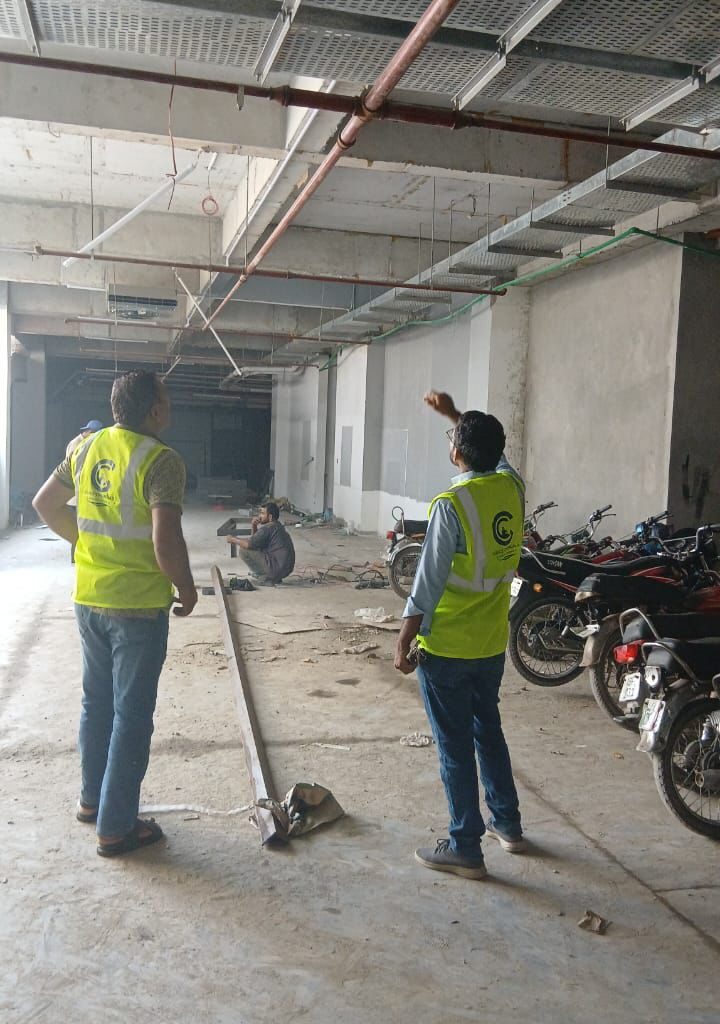
showing the Grace chemicals team is visitng the site .
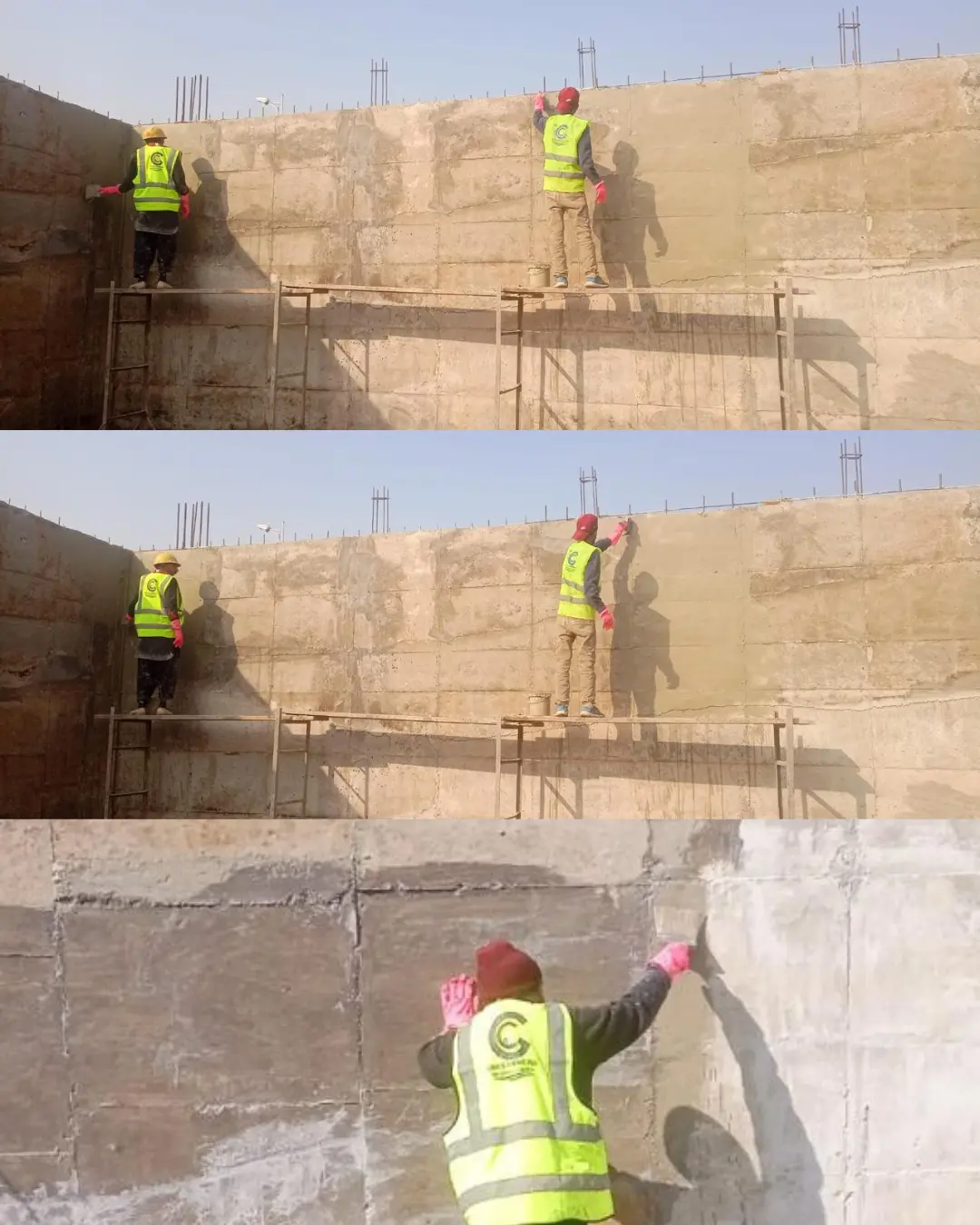
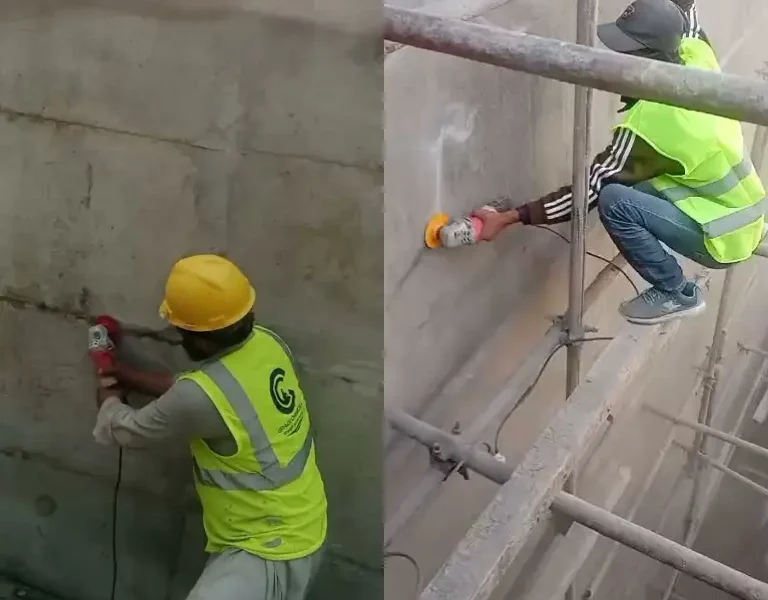
Grinding of basement wall

2) Surface Preparation (Non-Negotiable)

We mechanically prepare the substrate to ensure bond and continuity:

  • Grinding to remove laitance and weak layers
  • Opening up pores/capillaries where needed (especially on dense concrete)
  • Cleaning to remove dust, contaminants, and loose particles
  • Treating cracks and discontinuities before coating

Important: Waterproofing is not applied on loose/weak concrete. All unsound material is removed first.


3) Concrete Repair & Reinstatement

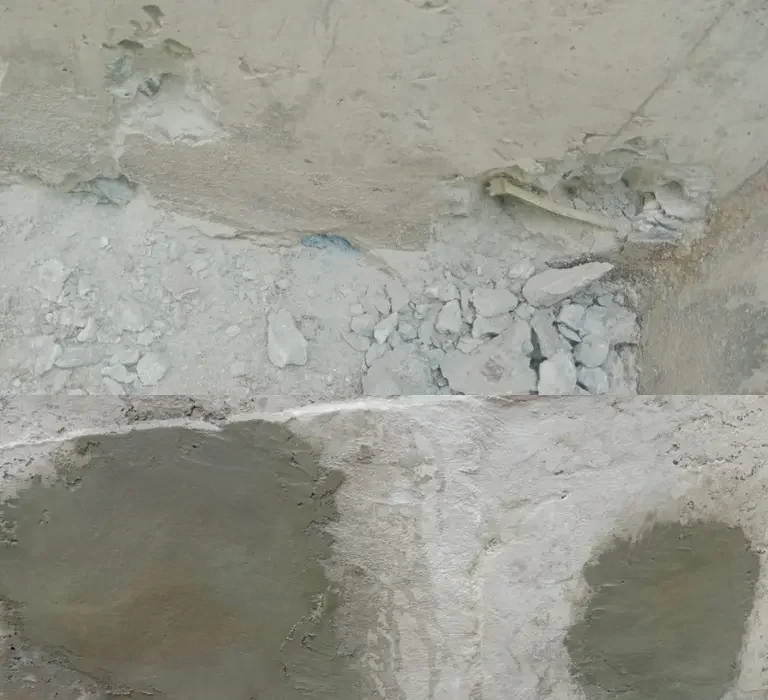
For damaged or leaking basements, structural repair is mandatory before applying any waterproofing system.Applying crystalline coating or slurry over honeycombing, loose concrete, or exposed reinforcement will lead to failure. The waterproofing layer will simply follow the weakness of the substrate.

Waterproofing is only as strong as the concrete beneath it.First, we remove all loose or weak concrete until sound substrate is achieved. Honeycombed areas, cavities, and voids are fully exposed and cleaned before reinstatement.

We use specialized German-engineered repair products depending on the type and severity of damage:

ProductTypeUsed For
INDUCRETE SC10Non-shrinkage repair mortarSurface damage, spalled concrete, patch repairs
INDUGROUT GPCementitious groutHoneycombing, cavities, structural voids
INDUBOND VK 4034Epoxy mortarExposed steel reinforcement protection and bonding
 
Concrete Repair & Reinstatement

4) Joint Waterproofing (Critical Detail)

Most basement failures originate at construction joints.
The raft-to-wall junction and cold joints are the highest-risk leakage locations and must be treated as primary structural details.

Preventive Joint Waterproofing

4.1 New Construction – Preventive Joint Waterproofing

For new basement construction, preventive joint treatment is mandatory.

Procedure:

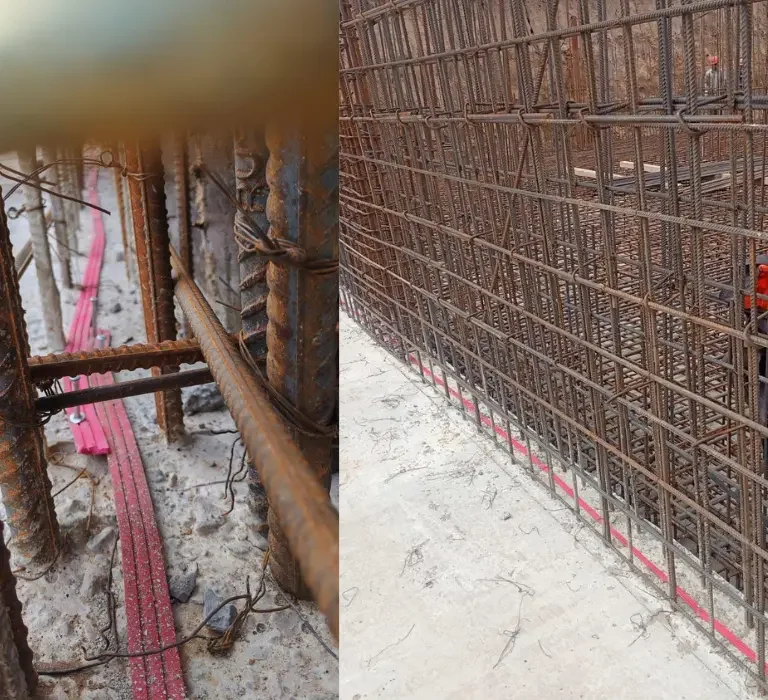
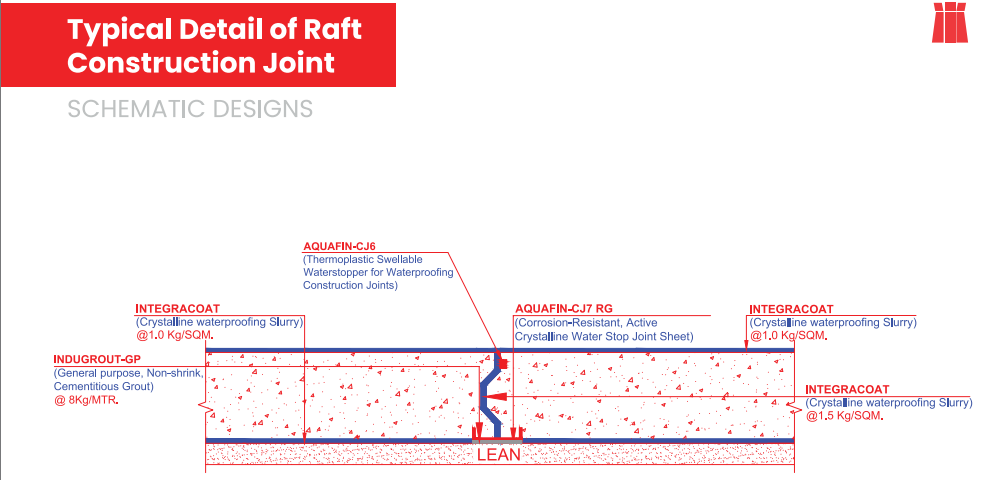
  • Install AQUAFIN CJ6 swell bar at the construction joint (raft-to-wall / wall-to-wall cold joints).

  • Ensure continuous placement without gaps.

  • Position swell bar centrally within wall thickness.

  • Secure properly before casting.

  • Ensure proper concrete compaction around joint zones to avoid honeycombing.

This provides preventive protection before hydrostatic pressure develops.


4.2 Existing Basement – Remedial Joint Waterproofing (Internal Access)

Where excavation is not feasible and treatment must be done internally, joint waterproofing is carried out from the negative side.

Surface Preparation:

  • Remove plaster and expose the actual construction joint.

  • Remove loose or weak concrete.

  • Clean substrate thoroughly.

Joint Treatment:

  • Form cementitious chamfer/fillet at the raft-to-wall junction where geometry requires.

  • Install ASO joint tape centrally over the joint.

  • Apply compatible crystalline or mineral-based waterproofing system over the tape to ensure continuity.

This restores waterproofing continuity at the highest leakage risk zone.

5) Active Leakage Control (Pre-Treatment Before Joint System)

If active water ingress is observed, leakage must be stabilized before installing joint tapes or crystalline systems. Do not apply waterproofing over live seepage .

Depending on Site Condition:


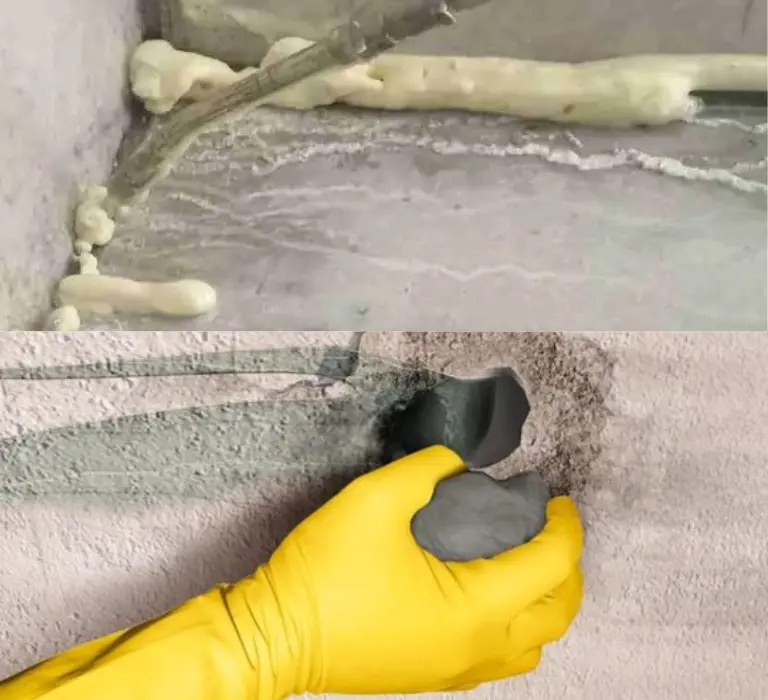
PU Injection (Polyurethane Injection)

Used when water is entering through cracks or joints under pressure.
Procedure includes:

  • Drilling and installing injection packers.

  • Controlled PU injection to seal internal voids.

  • Allowing expansion and reaction to block water pathways.

FIX 10-S (Rapid Setting Water Plug)

Used to immediately stop localized active leakage before proceeding with permanent repair.

Only after water flow is fully controlled do we proceed with joint tape installation and waterproofing coating.

Waterproofing System Selection (By Substrate)

The waterproofing system is selected based on the substrate type, structural condition, and site accessibility. Concrete and masonry behave differently under hydrostatic pressure and capillary action; therefore, treatment methodology must be aligned accordingly.

6) Concrete Basement Waterproofing – Crystalline / Penetrating System)

For concrete retaining walls, raft slabs, and slab-on-grade (SOG) areas, crystalline or penetrating waterproofing systems such as AQUAFIN IC or INTEGRACOAT are recommended where appropriate.

In contrast to conventional membrane systems that form a surface barrier, crystalline systems penetrate into the concrete matrix. When applied to a prepared concrete substrate, the active chemicals react with free lime and moisture present within the concrete to form insoluble crystalline structures. These crystals grow within capillaries and micro-pores, effectively blocking water pathways from within.

Crystalline action delivers  structural waterproofing rather than surface-level protection.

Key advantages of crystalline systems include:

  • Can be applied from positive or negative side depending on site access

  • Suitable for both new construction and rehabilitation projects

  • Effective against capillary water movement and micro-porosity typical in concrete

  • Not dependent on external protection boards or drainage layers

  • Becomes integral with the concrete structure

This approach is particularly beneficial in projects where excavation is not feasible or where external membrane systems are not part of the design scope.

Brick / Masonry Basement Waterproofing – Negative Side Application

Where basement walls are constructed with brick masonry and external access is unavailable, mineral-based negative-side waterproofing systems such as AQUAFIN 1K are typically used.

In such cases, the objective is to control water ingress from the interior without disturbing external backfill conditions.

This solution is generally adopted in existing or older basements where:

  • Excavation or external membrane installation is not possible

  • Seepage must be controlled from inside the structure

  • The substrate consists of masonry rather than dense reinforced concrete

The system provides strong adhesion to masonry substrates and creates a continuous mineral waterproofing barrier capable of resisting water pressure from the negative side.


Waterproofing During Construction Stage (Integral Protection)

For new projects, we strongly recommend integral protection at the concrete stage:

  • Waterproofing admixture in lean concrete

  • Waterproofing admixture in raft slab

  • Waterproofing admixture in retaining walls

As a result, this reduces permeability from within and improves long-term resistance against seepage and dampness.

Popular Questions About Roof Waterproofing

The most durable method is crystalline waterproofing combined with proper joint treatment and structural repair. It works within the concrete structure instead of forming a surface membrane.


Yes. Negative-side waterproofing systems such as crystalline coatings and mineral slurries allow internal application where external access is not possible.


Construction joints are treated using swell bars (CJ6) in new construction and joint tapes with compatible coatings in existing basements.


Yes. All loose or weak concrete must be removed and repaired using high-strength repair mortars before waterproofing application.


Yes. We provide system warranty subject to approved method statement and execution compliance.

READ oUT Recent Blogs

Welcome to our blog section your go-to resource for understanding and solving waterproofing challenges in buildings.Our expert guides combine real-world case studies, step-by-step repair methods, and product recommendations used in homes and commercial projects across Pakistan.Whether you’re dealing with construction problems or planning preventative solutions.

Seraphinite AcceleratorOptimized by Seraphinite Accelerator
Turns on site high speed to be attractive for people and search engines.