Steel Structure Protection and Waterproofing System

Steel structures are widely used in industrial, commercial, and institutional construction due to their strength and speed of execution. However, over time, exposure to air, moisture, dust, and environmental pollutants leads to corrosion and water ingress. These issues gradually reduce the service life of steel structures and increase maintenance costs.

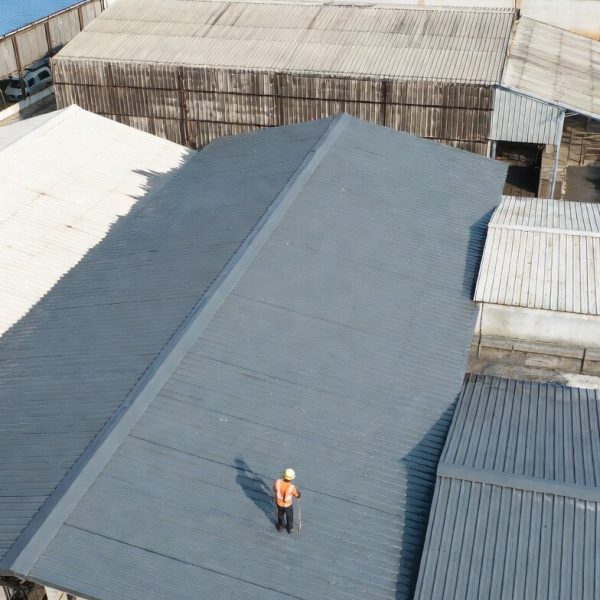
 A steel structure protection and waterproofing system is designed to control corrosion, prevent leakage, and extend the durability of steel roofs and structural components. This system integrates protective coatings and waterproofing treatments into one coordinated approach rather than treating problems separately.
Why Steel Structures Fail Over Time

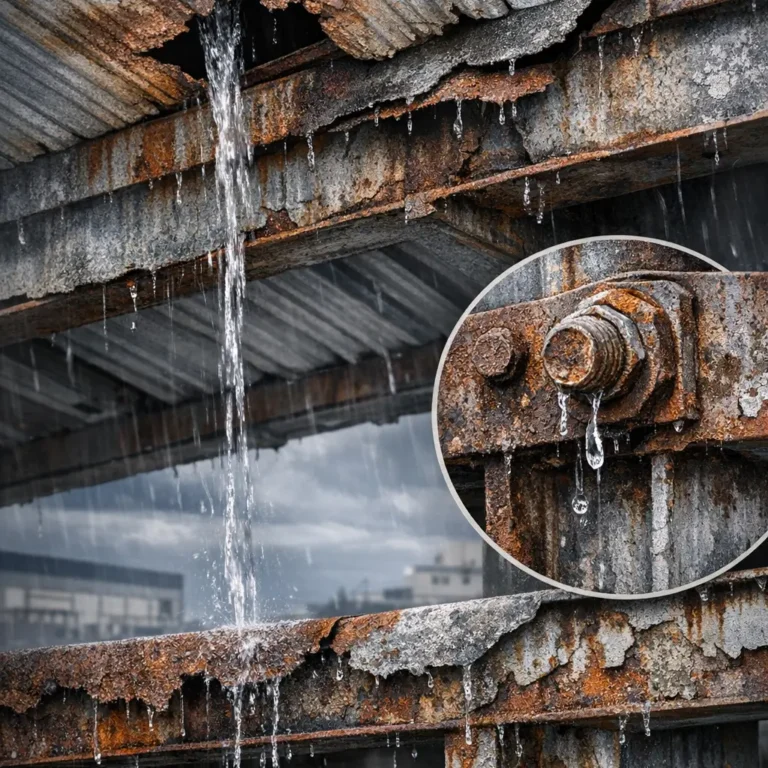
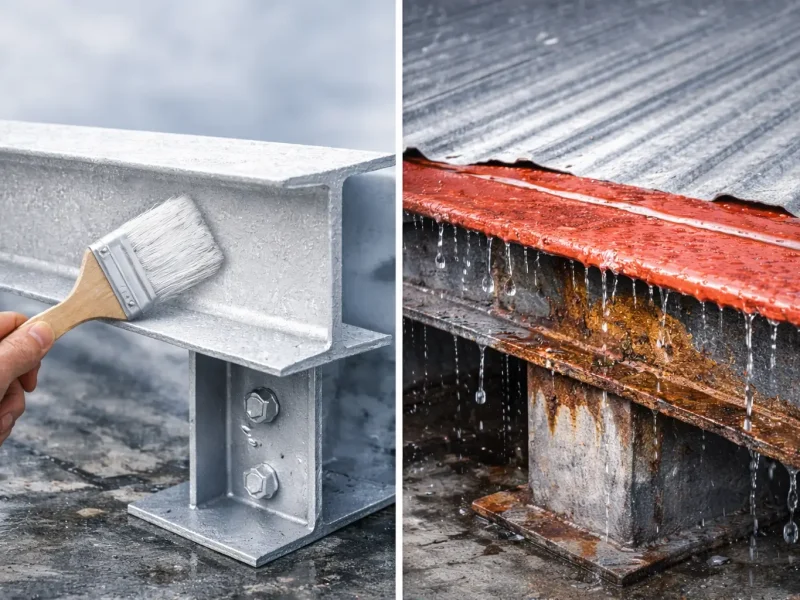
Steel structures face continuous exposure to harsh environmental conditions. Moisture and oxygen initiate corrosion, while temperature changes and movement affect joints and fasteners. When corrosion develops, it weakens steel sheets and creates openings that allow water to enter.

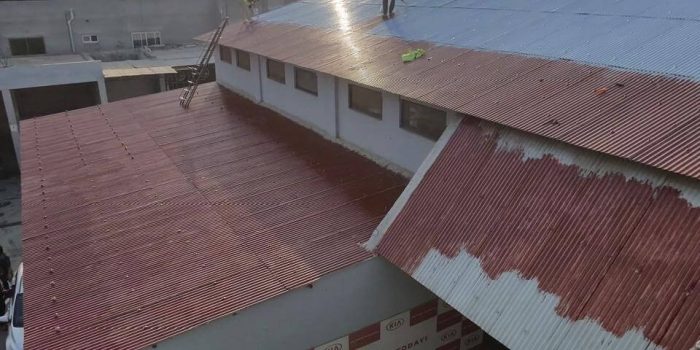
Over time, common problems include surface rust, corrosion at bolts, failed overlap joints, and breakdown of old coatings. Once water starts entering the structure, corrosion accelerates further, leading to repeated leakage and coating failure.

Common Steel Structure Problems
ProblemMain CauseResult
Surface rustMoisture and airWeakens coating
Pitting corrosionUntreated rustSteel thickness loss
Holes in sheetsAdvanced corrosionDirect leakage
Rusted boltsWater at fastenersMajor leakage points
Failed overlapsMovement and rustContinuous seepage
Old coating failureUV and poor preparationWaterproofing failure
----

Steel Protection and Waterproofing Are Not the Same

Steel protection and waterproofing serve different purposes, but both are essential. Steel protection focuses on preventing corrosion by isolating the steel surface from air and moisture. Protective coatings control rust formation and preserve structural integrity.

Waterproofing focuses on stopping water ingress through sheets, joints, overlaps, and fasteners. Waterproofing alone cannot stop corrosion if rust is already present.

For long-term performance, both steel protection and waterproofing must work together as a complete system.

Overview of the Complete System

The steel structure protection and waterproofing system follows a step-by-step approach. Each stage supports the next and ensures long-term durability.

1- Surface Preparation and Rust Treatment

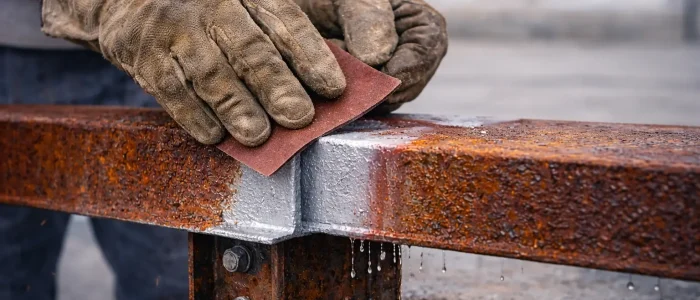
The process starts with surface preparation. Loose rust, scale, and deteriorated coatings are removed using mechanical cleaning methods. After cleaning, a rust treatment solution is applied to neutralize remaining corrosion and prepare the steel surface. This step is critical because untreated rust continues to grow beneath coatings and causes early failure.

rust removal

2- Anti-Corrosion Primer Application

Once the steel surface is clean and dry, an anti-corrosion primer is applied. Depending on exposure conditions, either a zinc-rich primer or a zinc phosphate primer is selected. 

These primers form the primary corrosion protection layer and prevent further rust development.

Application of zinc rich (1)

3- Protective Coating Build-Up

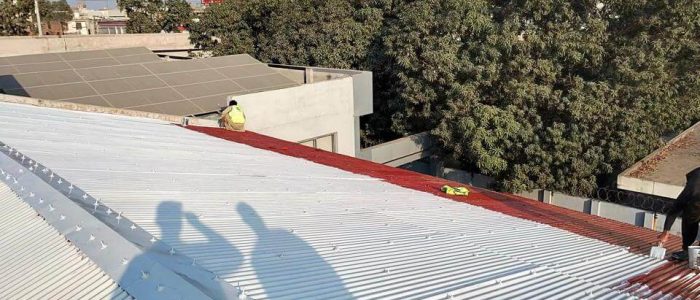
After priming, an epoxy intermediate coat is applied. This layer builds coating thickness and improves chemical and mechanical resistance. A polyurethane top coat is then applied as the final protective layer. This coating provides UV resistance, weather durability, and long-term surface protection.

Together, these layers form a durable protective coating system for steel structures.

Protective Coating Build-Up_

4- Waterproofing of Joints, Bolts, and Overlaps

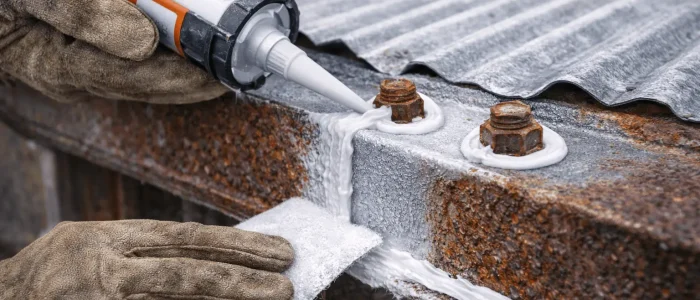
Joints, overlaps, and fasteners are the most vulnerable points for water ingress. Corrosion around bolts and sheet overlaps often becomes the main cause of leakage. To address this, elastomeric sealants are applied adjacent to bolts and along overlap joints. Where required, fleece reinforcement is embedded to strengthen waterproofing and accommodate movement. This detailing step ensures that water cannot reach the steel substrate.

Waterproofing of Joints, Bolts, and Overlaps_

Where This System Is Used

This steel structure protection and waterproofing system is suitable for a wide range of applications, including:

  • Industrial sheds and factories

  • PEB steel buildings

  • Warehouses and logistics facilities

  • Commercial and institutional structures

  • Renovation and rehabilitation projects

The system can be adapted based on sheet type and site conditions while maintaining the same core principles.

Key Benefits of the System

This integrated system offers several advantages:

  • Effective corrosion control

  • Long-term leakage prevention

  • Extended service life of steel structures

  • Reduced maintenance and repair costs

  • Compatibility with existing and aging steel roofs

By treating protection and waterproofing together, the system delivers reliable and durable results.

why this steel waterproofing and protective coating is beneficial (1)

Frequently Asked Questions (FAQs)

Yes. The system is designed for existing and corroded steel structures after proper surface preparation.


No. Mechanical cleaning combined with rust treatment is effective where blasting is not feasible.


Rust continues to grow beneath coatings if not treated, leading to early failure.


Yes. These areas are sealed and reinforced because they are common leakage points.

Where This System Is Used

For detailed explanations, explore the following guides:

  • Anti-Corrosion Coating System for Steel Structures

  • Waterproofing of Steel Roof Structures

  • Rust Treatment for Steel Structures

These guides explain each part of the system in greater detail.