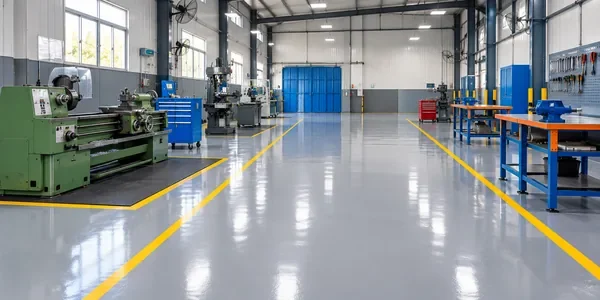
Seamless, durable epoxy flooring for industrial and commercial facilities in Pakistan.

What Is a Self-Leveling Epoxy Flooring System? Uses & Application

A well-designed floor needs more than an attractive finish. It should provide durability, easy maintenance, and a surface suited to its environment. Self-leveling epoxy flooring creates a smooth, seamless resin surface for suitable residential, commercial, and industrial applications.

Grace Chemicals offers a self-leveling epoxy flooring system with a recommended thickness of 2–5 mm, applied over properly prepared substrates according to project requirements.
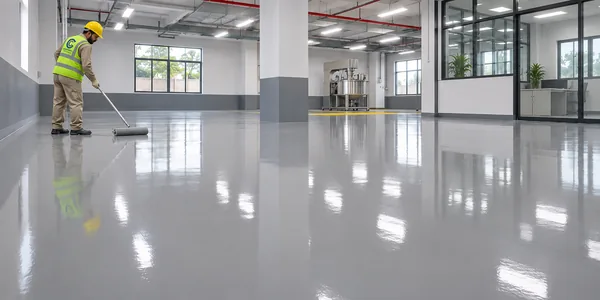
Epoxy flooring systems are widely used across industrial, commercial, and institutional facilities due to their strength, seamless finish, and resistance to wear and chemicals. In Pakistan and the Middle East, where industrial growth, high temperatures, and hygiene requirements are increasing, high-performance flooring system has become an essential part of modern construction practices.

This article explains what flooring system  is, how it works, why it is important, and where it is commonly used, helping you understand whether it is the right flooring solution for your project.

What Is Self-Leveling Epoxy Flooring?

Self-leveling epoxy flooring is a resin-based system designed to produce a smooth, continuous wearing surface.It consists of specially formulated epoxy components that are mixed and applied over a properly prepared substrate.

The material flows during application, helping create a uniform surface with minimal visible irregularities.

Unlike conventional thin epoxy coatings, self-leveling epoxy provides a higher-build resin flooring layer. It is commonly used where durability, surface appearance, and ease of cleaning are important.

How Does Self-Leveling Epoxy Work?

The system is applied over a prepared and primed surface. After mixing, the epoxy material is spread using suitable application tools. Its flow characteristics help distribute the material evenly. A spiked roller may be used to release entrapped air before the epoxy begins to set. Once properly cured, the system forms a hard-wearing, seamless floor finish.

Important: Self-leveling epoxy does not automatically repair damaged concrete or correct major differences in floor level. Substrate preparation remains essential.

Key Benefits of Self-Leveling Epoxy Flooring

01

Seamless Finish

Continuous resin surface without conventional tile grout joints.

02

Durable Wear Layer

Performance selected according to expected loads and floor conditions.

03

Chemical Resistance

Resistance varies by formulation, concentration and exposure time.

04

Easy Maintenance

A smooth surface that supports practical cleaning routines.

05

2–5 mm System Build

Current Grace system’s documented recommended thickness range.

06

Versatile Applications

May serve suitable commercial, institutional and industrial spaces.

Where Is Self-Leveling Epoxy Flooring Used?

Residential Flooring Applications

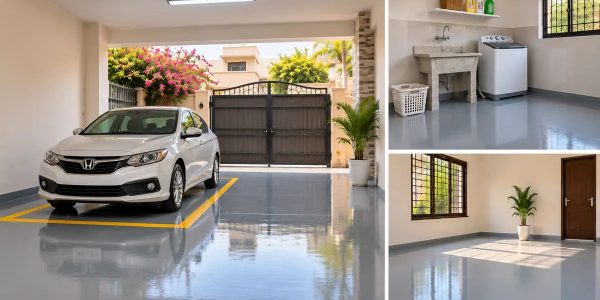
Selected epoxy flooring systems can be used in residential garages, utility rooms, and certain interior spaces.They may offer a seamless appearance and easy-to-clean surface.

However, residential installation requires particular attention to indoor air quality, ventilation, slip resistance, sunlight exposure, and occupant comfort.

Residential Flooring Applications

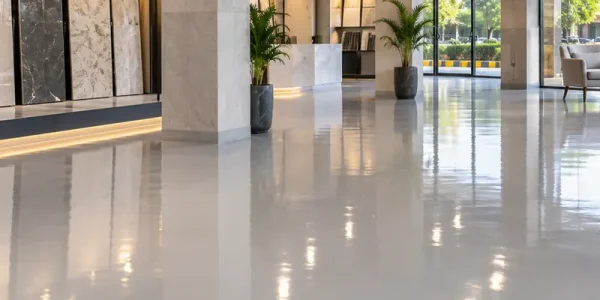
Commercial Buildings and Showrooms

Self-leveling epoxy can provide a smooth, attractive finish for suitable commercial environments.

It may be considered for showrooms, selected retail areas, and other commercial spaces where surface appearance and maintenance are important.

commercial-showroom-self-leveling-epoxy-flooring-pakistan

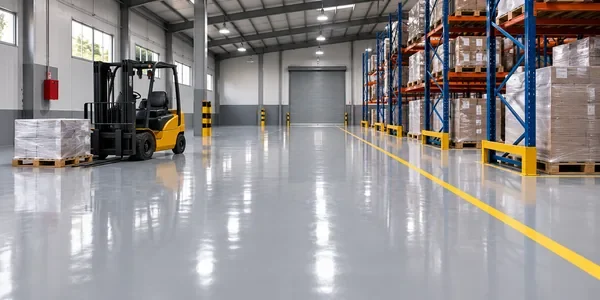
Warehouses and Storage Facilities

Warehouse floors require surfaces capable of accommodating the expected traffic and operational loads. Self-leveling epoxy may be suitable where the selected system meets requirements for abrasion, wheel movement, and maintenance.

Warehouse in Pakistan featuring smooth grey self-leveling epoxy flooring, storage racks, pallets and forklift traffic areas.

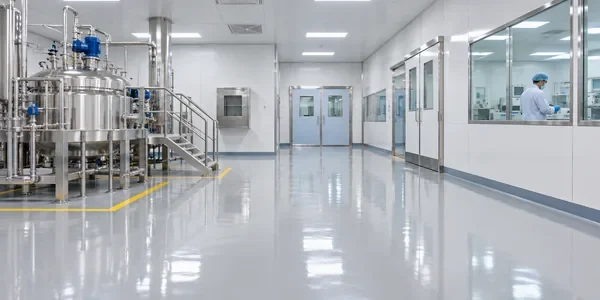
Pharmaceutical Facilities

Pharmaceutical buildings often require continuous, cleanable flooring surfaces. A suitably specified epoxy system may support these requirements. Chemical compatibility, cleaning procedures, hygiene standards, and facility-specific regulations must be considered.

Pharmaceutical manufacturing facility in Pakistan featuring seamless grey epoxy flooring, stainless steel equipment and hygienic cleanroom interiors.

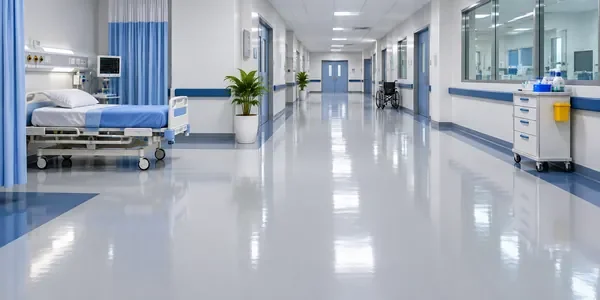
Hospitals and Healthcare Facilities

Selected healthcare environments may benefit from a continuous resin flooring surface. The flooring specification must consider cleaning requirements, slip resistance, chemical exposure, and the intended use of the area.

hospital-healthcare-self-leveling-epoxy-flooring-pakistan

Industrial Workshops

Workshops may expose floors to pedestrian traffic, equipment movement, oils, and regular cleaning. Self-leveling epoxy can be considered where the operating conditions are compatible with the specified flooring system.

Industrial workshop featuring smooth grey self-leveling epoxy flooring, machinery, workbenches and marked equipment movement areas.

Self-Leveling Epoxy Flooring System Layers

Installation quality starts before the epoxy is poured. These six stages summarize the current Grace system application.

1

Concrete substrate

Sound, assessed concrete supporting the flooring system.

2

Preparation & repairs

Remove contaminants and repair defects before installation.

3

Epoxy primer

Apply compatible primer under the approved specification.

4

Self-leveling layer

Place the specified resin wearing layer at 2–5 mm.

How Is Self-Leveling Epoxy Flooring Applied?​

Installation quality starts before the epoxy is poured. These six stages summarize the current Grace system application.

01

Inspect & Prepare

Check concrete, moisture, contamination and weak areas; grind or blast as specified.

02

Apply Primer

Use an approved compatible epoxy primer on the prepared surface.

03

Mix Components

Mix resin, hardener and aggregates to the approved proportions.

04

Place & Spread

Use a notched trowel or pin screed to achieve the specified thickness.

05

Release Entrapped Air

Use a spiked roller as specified, before the epoxy begins to gel.

06

Cure & Inspect

Protect the floor. Current Grace TDS states full cure in 7 days at 20°C.

Technical Specifications

PropertyCurrent Grace System
TechnologyEpoxy resin-based self-leveling system
Recommended thickness2–5 mm
Surface finishSmooth, high-gloss
Full cure7 days at 20°C
Minimum substrate temperature+10°C
PrimerCompatible Grace epoxy primer (EH1 or EH2 subject to specification)
ComponentsResin, hardener and aggregates
ApplicationNotched trowel or pin screed; spiked roller

Product-specific data. Refer to the approved current TDS; do not treat these values as universal for all epoxy systems.

Common Problems & Prevention

Air bubbles or pinholes: Substrate porosity or trapped air. Use correct priming and air-release methods.

Peeling or delamination: Weak, wet or contaminated concrete. Assess the substrate and prepare it properly.

Cracking: Underlying cracks or movement joints. Investigate and treat these before installation.

Premature wear: Incorrect system selection for loads or chemicals. Specify according to actual exposure.

Project Experience: Institute of Kidney Diseases

Grace Chemicals has documented a self-leveling epoxy flooring application associated with the Institute of Kidney Diseases (IKD).

Use verified project images and actual application details to demonstrate practical experience.

Site View of Institute Of Kidney Diseases IKD

Frequently Asked Questions

Clear answers to common questions about selecting and installing self-leveling epoxy flooring.

A resin-based flooring system that flows during application to produce a smooth, continuous wearing surface over a properly prepared substrate.

In suitable commercial, industrial and institutional spaces. Certain residential locations may also be suitable with an appropriately approved formulation.

The current documented recommended thickness is 2–5 mm. The selection must match site conditions and project requirements.

The current Grace system lists 7 days to full cure at 20°C. Earlier use must be separately confirmed.

Yes, if the concrete is sound, compatible and properly prepared. Moisture, contamination and defects need assessment.

A continuous surface may resist liquid penetration, but it is not automatically a full waterproofing system. Slip resistance depends on the specified finish and conditions.

Surface condition, preparation work, area, layer thickness, material system and site constraints. A project quotation is needed.

Discuss Your Flooring Project with Our Technical Team

Tell us about your floor area, substrate condition, expected loads and working environment. Request project-specific guidance and a quotation.

Related Flooring Resources

What Is Epoxy Flooring?

A clear introduction to epoxy flooring and its general uses.

Industrial Epoxy Flooring Services

Explore wider flooring solutions for commercial and industrial projects.

IKD Project

See Grace Chemicals’ documented institutional flooring work.